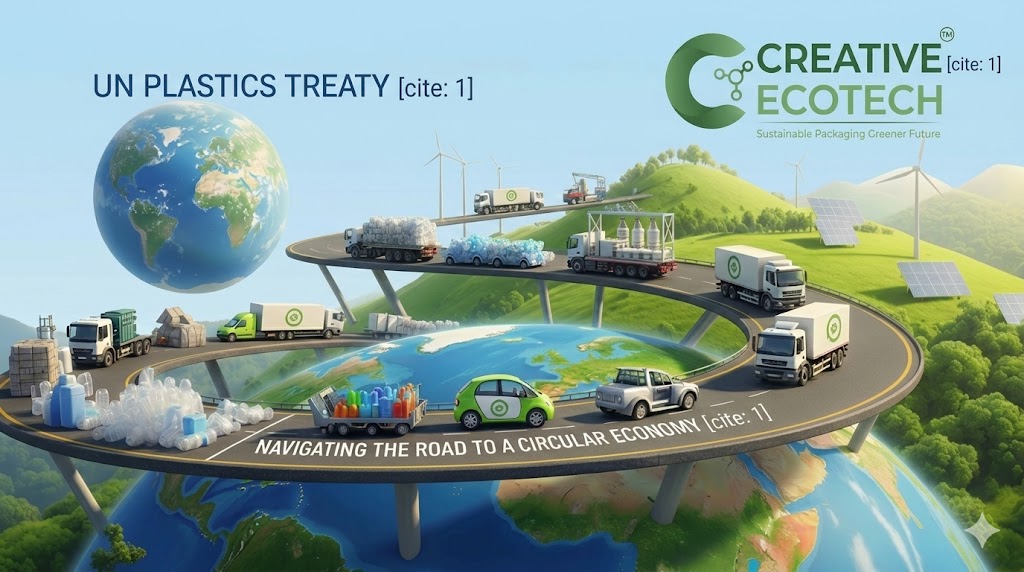
Plastic pollution has become one of the most urgent environmental crises of our time. From oceans and rivers to soil and even the human bloodstream, plastic waste has infiltrated nearly every corner of the planet. In response, the UN Plastics Treaty—formally known as the Global Treaty to End Plastic Pollution—aims to create a legally binding international framework to address plastic pollution across its entire lifecycle.
But what does this mean for governments, businesses, and sustainability leaders? More importantly, how does the treaty accelerate the transition toward a circular economy?
Let’s explore how the UN Plastics Treaty is shaping global plastic waste policy and redefining sustainable business practices.
Understanding the UN Plastics Treaty
The UN Plastics Treaty is a global agreement under negotiation by United Nations member states to develop a legally binding instrument to end plastic pollution. Unlike previous voluntary commitments, this treaty seeks enforceable rules covering:
- Plastic production and consumption
- Product design and materials
- Waste management systems
- Recycling infrastructure
- Extended Producer Responsibility (EPR)
- International cooperation and financing
The treaty takes a full lifecycle approach—meaning it addresses plastics from raw material extraction to disposal and reuse. This lifecycle perspective aligns directly with circular economy principles.
Why the World Needs a Global Plastic Waste Policy
Plastic production has grown exponentially over the past five decades. Yet only a small percentage of plastic waste is effectively recycled. The rest is:
- Landfilled
- Incinerated
- Leaked into oceans and ecosystems
Without systemic change, plastic waste is projected to triple by 2040. Fragmented national regulations are not enough. A coordinated global plastic waste policy is essential to:
- Harmonize standards across borders
- Prevent regulatory loopholes
- Support developing countries with infrastructure and financing
- Drive innovation in sustainable materials
The UN Plastics Treaty is designed to close these gaps.
The Circular Economy: A Symsteic Shift
At the heart of the UN Plastics Treaty is the transition to a circular economy—an economic model that eliminates waste and keeps materials in continuous use.
Unlike the traditional linear model (take–make–dispose), a circular economy focuses on:
- Designing products for durability and recyclability
- Reducing virgin plastic production
- Promoting reuse and refill systems
- Strengthening recycling markets
- Recovering materials instead of discarding them
The treaty reinforces circular economy practices by encouraging nations to set reduction targets, standardize product design requirements, and implement Extended Producer Responsibility systems.
Key Provisions Supporting a Circular Economy
1. Reduction in Virgin Plastic Production
Many treaty discussions focus on limiting the production of virgin fossil-fuel-based plastics. Reducing production addresses pollution at its source and lowers carbon emissions tied to plastic manufacturing.
2. Extended Producer Responsibility (EPR)
EPR frameworks require manufacturers to take responsibility for the end-of-life management of their products. This shifts waste management costs from governments to producers and incentivizes eco-design.
3. Sustainable Product Design Standards
The treaty may establish global standards for recyclability, compostability, and elimination of hazardous additives—making plastic products easier to recover and reuse.
4. Financing Mechanisms
Developing countries often lack adequate waste management systems. The treaty includes discussions around financial mechanisms to support infrastructure, technology transfer, and capacity building.
Implications for Businesses
The UN Plastics Treaty represents both a regulatory challenge and a strategic opportunity for companies.
Compliance and Risk Management
Businesses in packaging, manufacturing, retail, and consumer goods must prepare for:
- Stricter plastic regulations
- Mandatory reporting requirements
- Plastic footprint disclosure
- Increased recycling targets
Early adoption of sustainable business practices will reduce compliance risk and enhance brand reputation.
Innovation and Competitive Advantage
Companies that invest in:
- Reusable packaging systems
- Bioplastics and alternative materials
- Closed-loop manufacturing
- Digital waste tracking solutions
will be better positioned in a circular economy landscape.
Sustainability is no longer a corporate social responsibility initiative—it is a business continuity strategy.
Challenges on the Road Ahead
While the UN Plastics Treaty is ambitious, implementation will not be simple.
1. Global Consensus
Countries differ in economic priorities and levels of plastic production. Achieving agreement on binding production caps and reduction targets remains complex.
2. Monitoring and Data Transparency
Accurate tracking of plastic production, trade, and waste flows requires robust data systems and global reporting standards.
3. Infrastructure Gaps
Many regions lack formal waste collection and recycling systems. Without investment, treaty goals may remain aspirational.
4. Balancing Industry and Environmental Interests
Negotiations must balance economic concerns with urgent environmental protection.
Circular Economy in Action: Real-World Examples
Despite challenges, circular economy models are already delivering measurable results.
- Deposit Return Schemes (DRS) in several countries have dramatically increased recycling rates for beverage containers.
- Refill and reuse platforms in the consumer goods sector are reducing single-use plastic packaging.
- Closed-loop recycling initiatives are enabling manufacturers to use post-consumer recycled materials in new products.
These initiatives demonstrate that systemic change is possible when policy, technology, and industry collaborate.
The Climate Connection
Plastic pollution is not just a waste issue—it is also a climate issue. Plastics are derived primarily from fossil fuels, and their production contributes significantly to greenhouse gas emissions.
By reducing virgin plastic production and promoting circular systems, the UN Plastics Treaty supports broader climate goals and aligns with global decarbonization efforts.
A Turning Point for Sustainable Business Practices
The UN Plastics Treaty signals a shift from voluntary sustainability pledges to enforceable global standards. For forward-thinking organizations, this is an opportunity to:
- Embed circular economy principles into operations
- Rethink product design and supply chains
- Invest in recycling and recovery innovation
- Strengthen ESG reporting frameworks
Businesses that proactively align with the treaty’s objectives will not only meet regulatory expectations but also build resilience in a rapidly evolving market.
Looking Ahead: The Future of Plastic Governance
The road to a circular economy is complex, but the UN Plastics Treaty represents a historic opportunity to reshape how the world produces, consumes, and manages plastic.
Success will depend on:
- Strong political commitment
- Private sector innovation
- Cross-border collaboration
- Transparent monitoring systems
If implemented effectively, the treaty could mark the beginning of a global transformation—one where plastic waste is minimized, resources are preserved, and economic growth is decoupled from environmental harm.
The transition will not happen overnight. But with coordinated action and strategic leadership, the world can move from a plastic pollution crisis to a regenerative, circular future.
The Future Is Circular — And It Starts Now
The UN Plastics Treaty represents a turning point in global environmental governance. Businesses that act early will gain competitive advantage, strengthen stakeholder trust, and contribute meaningfully to solving plastic pollution.
Creative EcoTech is committed to guiding organizations along this journey — from regulatory readiness to circular excellence.
If your business is ready to align with the future of sustainable plastic waste management and circular economy innovation, now is the time to partner with Creative EcoTech.
his transformation — helping turn regulatory mandates into sustainable growth opportunities.
Partner with us to support ethical manufacturing. Contact Creative Ecotech to learn more about how we embed fairness and safety into every layer of our business. Let’s build a more responsible and sustainable future—together.
For further information, you can communicate with us at 033-40010135 or send mail to admin@creativeecotech.com and get solutions to your questions. Apart from that, you can visit our office located at Ecostation Building, Saltlake, Sector V, Kolkata to have a face-to-face discussion with us. Also, visit our official website to witness the services we deliver. Let’s work together to make plastic production more responsible and planet-friendly.